
If your child has been invited to take the NNAT® 2 (Naglieri Nonverbal Ability Test®, Second Edition), you may be wondering what the test measures and how to help them prepare.
The NNAT 2 is one of the most widely used gifted and talented screening assessments in the United States. Unlike traditional achievement tests, the NNAT measures nonverbal reasoning and problem-solving abilities rather than reading, vocabulary, or mathematics knowledge. Because the test relies primarily on pictures and patterns instead of language, it can be administered to children from diverse linguistic and cultural backgrounds.
This guide explains the four types of questions found on the NNAT 2, provides examples of each, and offers practical tips to help your child become familiar with the test.
The Naglieri Nonverbal Ability Test, Second Edition (NNAT 2) is a nonverbal assessment of reasoning and problem-solving ability developed for students from Kindergarten through Grade 12.
Because the test relies on visual patterns rather than language, it is frequently used with students from diverse linguistic and educational backgrounds.
Many school districts administer the NNAT 2 as part of their gifted and talented screening process.
The assessment may be administered on paper or by computer and includes:
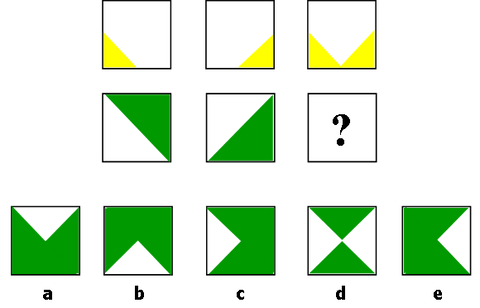
Pattern Completion questions are generally the easiest questions on the NNAT and appear most frequently in the lower grade levels.
Children are shown a design with one piece missing. Their task is to determine which answer choice correctly completes the pattern.
These questions measure:

Reasoning by Analogy questions present children with two or three rows of objects arranged in a matrix.
To solve the problem, the child must determine how the objects change across rows and down columns, then identify the missing object that follows the same relationship.
These questions assess:
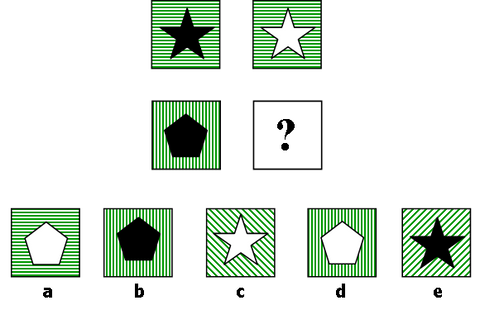
Serial Reasoning questions require children to recognize how shapes change both across rows and down columns.
Each shape appears only once within each row and column, requiring students to identify multiple relationships simultaneously before selecting the correct answer.
These questions evaluate:
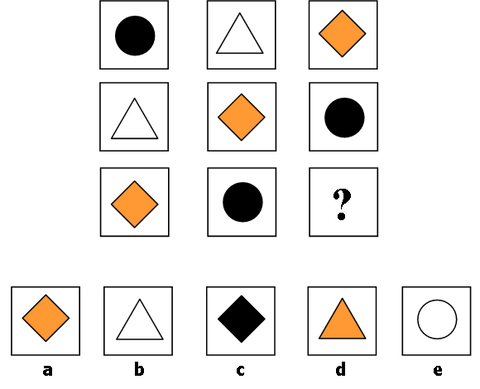
Spatial Visualization questions are generally the most challenging items on the NNAT and appear primarily in the higher grade levels.
Children must mentally combine, rotate, or manipulate shapes to determine what the completed figure would look like.
These questions measure:
Rather than measuring school knowledge, the NNAT 2 evaluates a child's ability to reason using visual information.
The assessment measures skills such as:
Because these abilities rely very little on language, the NNAT 2 is often considered an excellent assessment for students from diverse educational and language backgrounds.
Parents often ask whether children can study for the NNAT 2.
Children should not memorize answers or attempt to "learn the test." However, they can benefit from becoming familiar with the question types, directions, and testing format.
Just as adults feel more comfortable taking an exam after seeing sample questions, children often perform with greater confidence when they understand what to expect on test day.
Practicing similar problems can help children:
The Test Tutor NNAT® 2 Practice Books provide realistic practice that closely resembles the content, format, and difficulty of the actual assessment.
Each workbook is designed by experienced educational test developers and includes:
Rather than teaching memorized answers, the books help children strengthen the reasoning skills measured on the assessment while becoming familiar with the testing experience.
Helping children understand the NNAT 2 testing format before test day can make a meaningful difference in their confidence. By practicing nonverbal reasoning, pattern recognition, visual-spatial thinking, and problem-solving, students can approach the assessment feeling more comfortable and prepared.
The Test Tutor's NNAT® 2 Practice Books provide realistic, grade-specific practice designed to help children build familiarity with the assessment while strengthening the reasoning skills measured on the test.
The Naglieri Nonverbal Ability Test® Second Edition/NNAT® 2 is a registered trademark of NCS Pearson Inc. Test Tutor Publishing is not affiliated with or related to NCS Pearson Inc. or its affiliates. NCS Pearson does not sponsor or endorse Test Tutor Publishing products or services. Test Tutor Publishing's products and services have not been reviewed, certified or approved by NCS Pearson.Trademarks referring to specific test providers are used by Test Tutor Publishing for nominative purposes only and such trademarks are solely the property of their respective owners.

Discover what the WISC-V measures, what subtests your child will face, and the best strategies and practice materials to help them succeed.

If your child has been scheduled to take the WPPSI-IV, you probably have questions — what does the test measure, what kinds of questions will your child see, and most importantly, how can you help them prepare? This guide walks you through everything parents need to know.